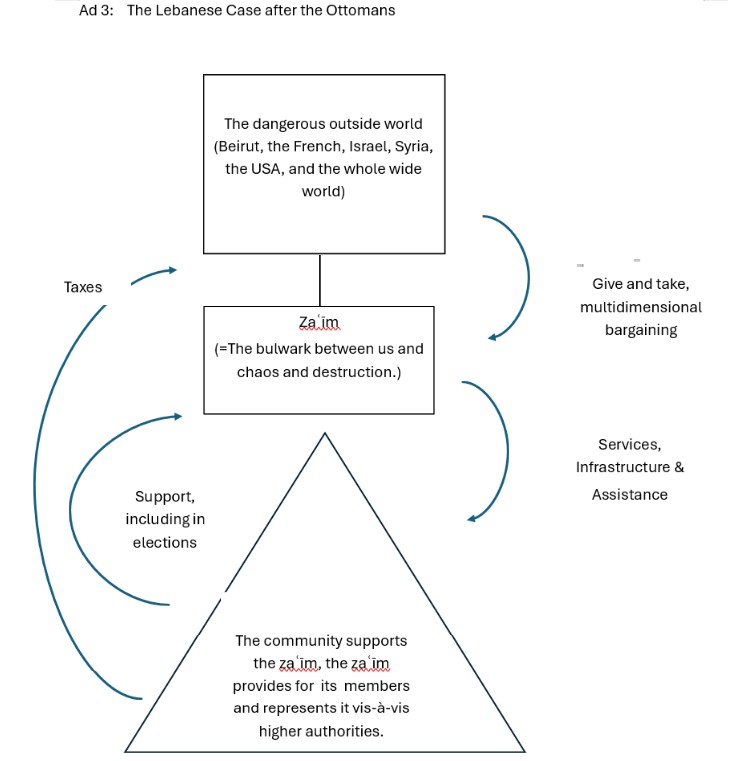
The following lines are meant to illustrate and concretize Charbel Nahas’ concept of the Lebanese state articulated in the interview.
The Ottoman state is regularly claimed to have been based on the so-called millet system, in which self-governed ethno-religious communities (Armenians, Jews, Greeks, Arab Sunnis, Arab Shia, …) interacted with a central imperial authority, the Sultan or his representatives.
In metropolitan contexts (e.g. in Istanbul, Damascus, Cairo, Alexandria, Jerusalem, etc.) this led to the emergence of a complex integrated society, in which many communities existed alongside each other, being visible to and aware of each other. In peripheral locations, this was not necessarily the case.
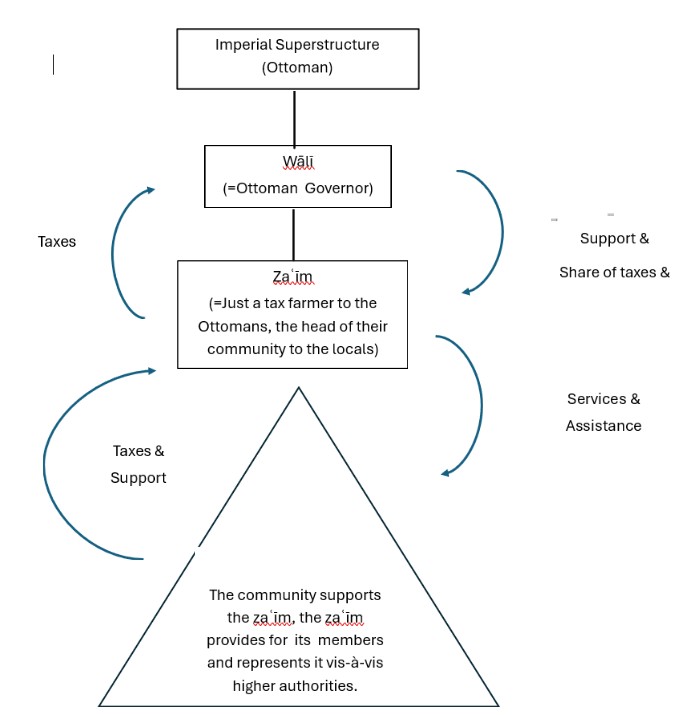
This is illustrated here in three diagrams, illustrating:
- The centralized Ottoman case
- The peripheral Ottoman case (Lebanon)
- The Lebanese case today

My comments on this case.
My comments on this case.
My comments on this case.